You sell on Instagram or Facebook. Orders arrive on WhatsApp, the accounts live in a notebook, and every second message asks the same thing: "COD hai?" Now you want your own online store, and you are wondering whether cash on delivery will build the business or drain it.
It can do either. COD brings orders from people who do not trust you yet. It also brings fake orders, refused parcels and money that sits with the courier. This post shows how to set things up so the first outweighs the second.
How do you start an online store in Pakistan with cash on delivery?
Start with cash on delivery as your main payment option, because a new customer trusts "pay when it arrives" more than any promise on a website. Confirm every order by phone or WhatsApp before it ships, connect one courier to your store so bookings and tracking are not typed by hand, and match the courier's payments against your orders every week. Add JazzCash, Easypaisa or card payment later, when returns start to hurt or regular customers ask for it.
Every COD order passes through 5 steps:
- The customer places an order on your website.
- You confirm it by phone or WhatsApp.
- The courier picks up the parcel and delivers it.
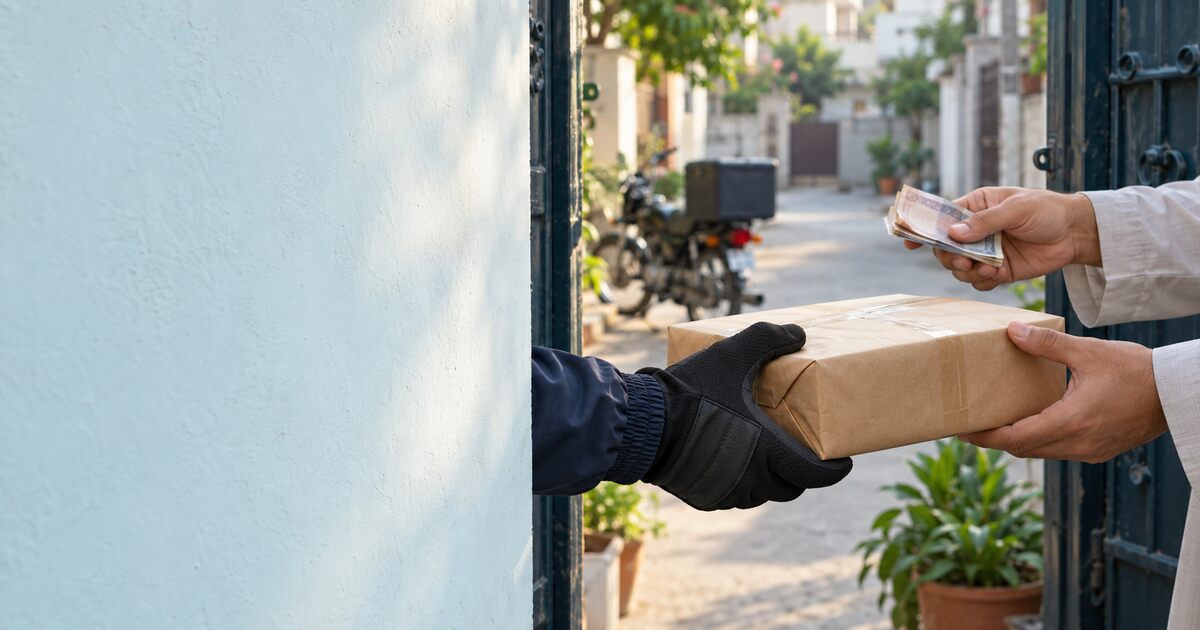
- The courier collects the cash from the customer.
- The courier deducts its charges and sends the rest to your account.
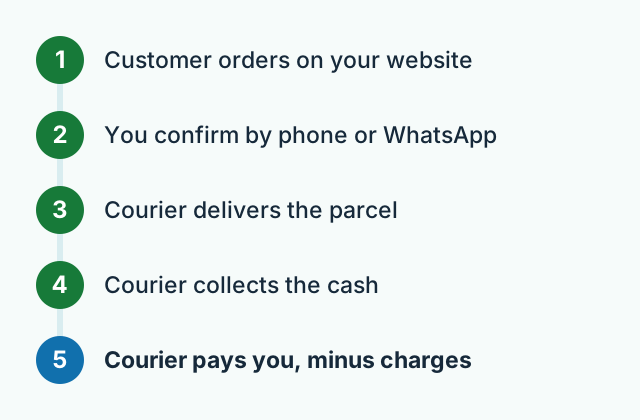
The sale is not complete until step 5. Everything below is about getting more of your orders all the way there.
Why does cash on delivery still matter in Pakistan?
A new customer does not know you. They may have paid someone in advance before and received nothing. They may not have a card at all. For them, COD means "I will see the parcel first, then pay."
So if your store opens with online payment only, you are asking strangers for trust you have not earned yet. COD removes that barrier. It costs you something, but it gets the first order, and the first order is how trust begins.
What really goes wrong with COD orders?
Three things, and it helps to name them before you launch.
- Fake orders. Someone orders for fun, types a wrong number, or a child plays with a parent's phone. You pack it, ship it, and nobody is there to receive it.
- Refused and returned parcels. The customer changed their mind, found it cheaper elsewhere, or did not have cash at home that day. The parcel comes back, and depending on your courier's terms, you may pay for the journey both ways.
- Slow cash. The courier holds your money until its payment day. If you buy stock with cash, that gap matters.
Say you sell unstitched suits from a shop in Lahore's Ichhra bazaar. A parcel refused in Multan is not just a lost sale. The suit is out of your stock for days, it may come back creased, and you have paid delivery on it. A handful of those in a week can wipe out the profit from the orders that went well.
None of this means COD is a bad idea. It means COD needs rules.
How do confirmation calls cut fake orders and returns?
The cheapest protection you have is a short conversation before the parcel leaves.
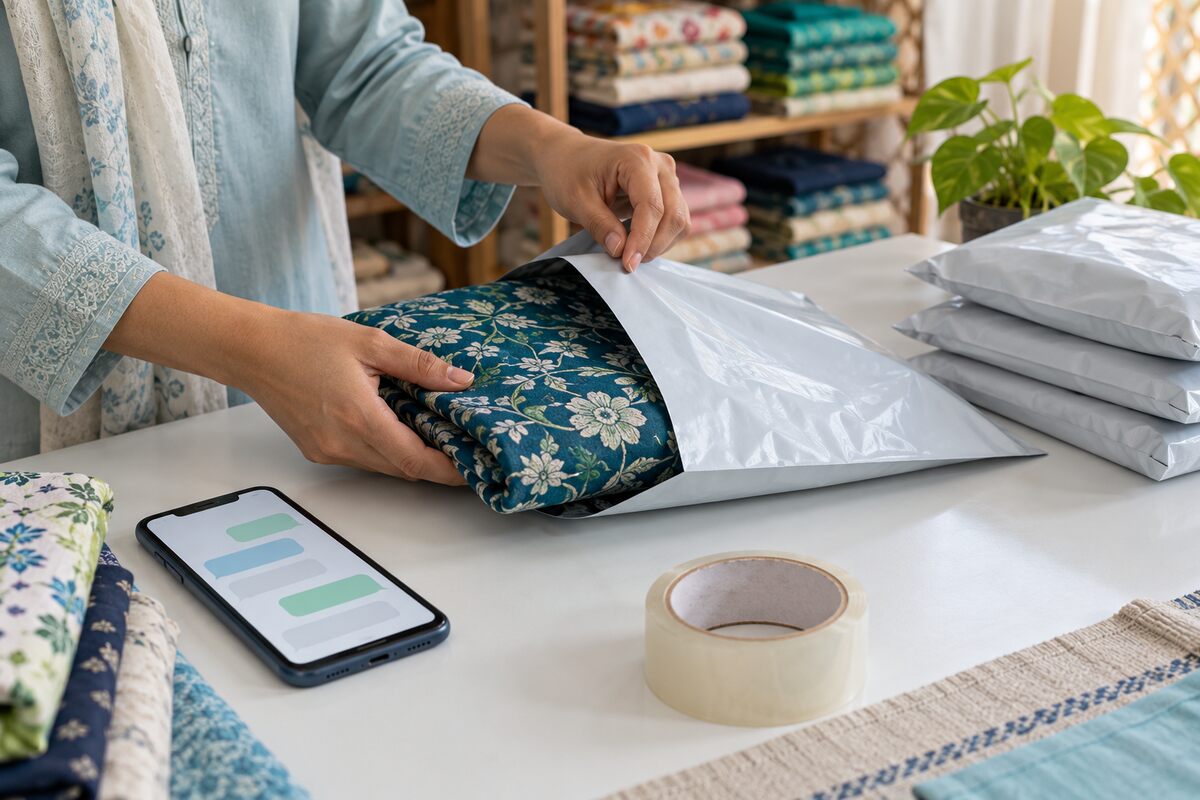
- Confirm every order the same day. A call or a WhatsApp message: "You ordered this item, in this colour, for this total. Shall we send it?"
- Read back the address and a landmark. Many failed deliveries are simply bad addresses.
- Say the total clearly, including delivery charges, so there is no argument at the door.
- Do not ship what you cannot confirm. Try twice, then cancel the order politely.
- Keep a list of numbers that refused parcels. Next time, ask those customers for the delivery charges in advance.
A WhatsApp confirmation is easier when your store and WhatsApp are connected. Our guide to WhatsApp Business website integration explains how that works in plain words.
How should your store connect to a courier?
In the beginning you can book parcels by hand on the courier's own portal. Once orders grow, typing every name and address twice becomes slow and full of mistakes.
Many courier companies offer a way for a store to connect to their system. When it is connected, a confirmed order is booked from your store's admin panel, the tracking number is saved against the order, and the customer can be told where their parcel is. Whether your courier supports this, and how well, is something we check before quoting.
Before you choose a courier, ask for these in writing:
- Delivery charges, by city and by weight.
- The fee for a returned parcel.
- When and how COD money is paid to you.
- How long returns take to come back.
Then match the courier's payment statement against your own order list every week. Look for parcels marked delivered but not paid, and returns that never reached you. Small gaps found weekly are easy to fix. The same gaps found after six months are not.
When should you add online payment?
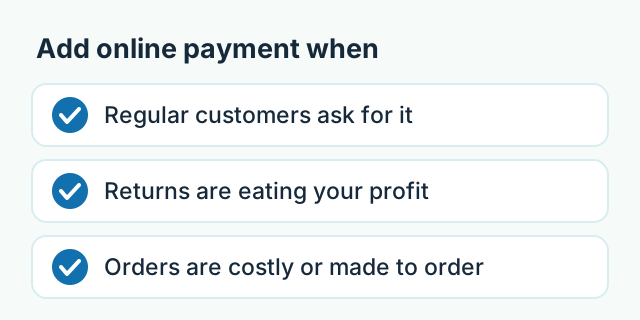
Not on day one, unless your product demands it. Add it when you see one of these signs:
- Regular customers ask for it. People who have ordered before are happy to pay in advance.
- Returns are eating your profit. A customer who has already paid rarely refuses the parcel.
- Orders are costly or made to order. You should not carry the full risk on an expensive or customised item.
Say you make customised name necklaces in Faisalabad. If a customer refuses that parcel, you cannot sell it to anyone else. Taking full or part payment in advance on made-to-order items is fair, and customers understand it when the rule is written on the product page.
Online payment is not instant to set up. JazzCash, Easypaisa and card gateways approve each merchant themselves, after checking your business documents. We handle the application and the integration, but the decision and the timing are theirs. So apply before you urgently need it, and keep COD running alongside.
What should the store itself do for you?
A COD store is more than product pages. At minimum it should give you:
- An order list with clear statuses: new, confirmed, shipped, delivered, returned.
- An admin panel where you update products, prices and stock yourself.
- Your COD and return rules shown plainly at checkout.
- A WhatsApp button, because customers will still want to ask a question first.
An online store is scoped by what it must do, so we quote it in writing after a short call rather than guess a figure here. You can see how we price and scope projects under our fixed-price packages.
A short checklist before you launch
- Offer COD first; plan online payment as the second step.
- Confirm every order before it ships, and cancel what you cannot confirm.
- Get the courier's charges, return fee and payment schedule in writing.
- Match courier payments against your orders every week.
- Write your return and advance rules on the website.
To see the kind of platforms we have built, have a look at our recent work. If you would like a fixed written quote for your own store, send us a short message and a real person on our Lahore team will reply.
Frequently asked questions
Can an online store run on cash on delivery alone?
Yes. Many stores begin with COD only. Set a rule for confirming orders, keep a record of returned parcels, and add online payment once regular customers start asking for it.
Is it fine to take delivery charges in advance?
Yes. Many sellers ask new or doubtful customers to pay only the delivery charges first and the rest on delivery. Write the rule clearly on your website so nobody is surprised at checkout.
When does the courier pay me the cash it collected?
That depends on each courier company's own terms. When you open the account, get the payment schedule, the delivery charges and the return fee in writing.
Do I need a registered company to open an online store?
To start with COD, usually not. For a JazzCash, Easypaisa or card merchant account, the provider checks your business documents, so ask them first what they need.
Should I remove COD once online payment is working?
No. Keep both. New customers still prefer to pay on delivery, while regular customers enjoy paying in advance. Let the customer choose.