

Your website went live last year. It works, customers find you, and you have mostly forgotten about it. Then a message arrives: "Your domain is about to expire." Or worse, nothing arrives — and one morning your website and your business email simply stop working.
Most business owners never had domain and hosting explained to them. They paid a developer once and assumed the website was theirs forever. This post explains, in plain language, what you pay for every year, roughly how much, and how to make sure nobody can hold your website hostage.
How much do domain and hosting cost per year?
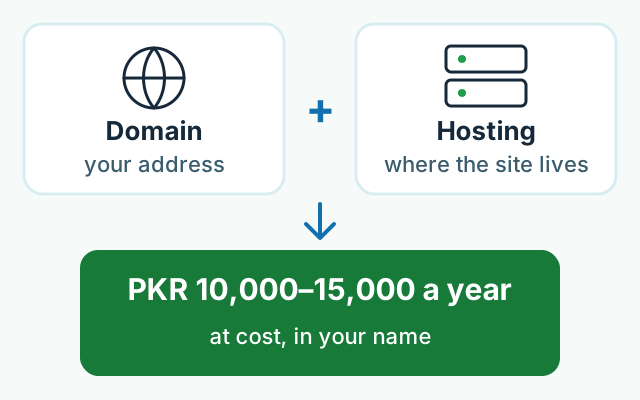
For a typical business website in Pakistan (a .com domain plus hosting), expect about PKR 10,000–15,000 a year in total. That is what we see for the business sites we build, and we bill it at cost — no markup. Both accounts should be registered in your name, so you pay the provider directly and you own them outright.
That yearly fee is separate from the one-time cost of building the website. If you want the full picture of build costs, see how much a website costs in Pakistan.
What is a domain?
A domain is your website's address — the name people type, like yourbusiness.com or yourbusiness.pk. Think of it as the signboard and address of a shop. It also powers your business email (info@yourbusiness.com).
You never buy a domain forever. You rent it, a year (or a few years) at a time, from a company called a registrar. As long as you keep renewing, the name stays yours. Stop paying and, after a grace period, anyone can register it.
What is hosting?
Hosting is the computer (a server) where your website's files, images and data actually live, switched on 24 hours a day. When someone types your domain, their phone connects to that server and loads your pages.
If the domain is your shop's address, hosting is the building itself. You can have an address with no building (a domain with no website), but you can't open a shop without both.
Hosting quality matters more than most people think. A cheap, overcrowded server can make a well-built website slow on Pakistani mobile networks — and slow sites lose customers before the first picture loads.
Why must the accounts be in your name?
This is the part that costs Pakistani businesses the most money, so it's worth being direct about it.
When a freelancer or agency registers your domain and hosting under their own account, you don't own your website — they do. It works fine until something changes: they get busy, change their phone number, raise their prices, or you have a disagreement. Then you discover you can't renew your own domain, can't move your website, and can't even get your business email back.
Say you run a school in Faisalabad. Your nephew built the website five years ago on his own account. Now he has moved abroad and doesn't reply. The domain expires, parents see an error page during admission season, and you start from zero with a new name. Every printed brochure with the old address is now wrong.
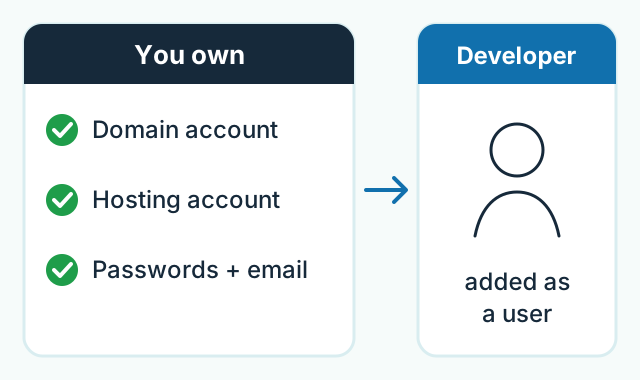
The fix is simple, and it's our standard practice: the domain and hosting are registered in the client's name, with the client's email. Your developer gets access as a user to do the work, but the account belongs to you. You pay the provider at cost, and nobody can take the website away.

What renewal traps should you watch for?
A few things catch people out every year:
- The first-year discount. Many providers advertise a very low price for the first year and charge more at renewal. Before you sign up, check the renewal price, not just the welcome offer.
- Renewal emails going to the wrong inbox. If the account uses your developer's email, or an old address nobody checks, you'll never see the warning. Use an email you read every day.
- Expired card or wallet. Auto-renew fails quietly when the card on file has expired. Check your payment method once a year.
- Paying a middleman a "yearly maintenance" fee that is really just the domain and hosting with a large markup. Ask for an itemised bill. With us, domain and hosting are at cost, and the care plan (if you want one) is a separate, clearly described service.
- Domain and hosting renewing on different dates. Two renewal dates means two chances to forget. Note both in your phone calendar.
Is there anything else you pay every year?
For a simple business website, domain and hosting are usually the only yearly costs. Some things are optional:
- A care plan if you want someone maintaining the site — updates, backups, monitoring and small changes. Ours is from PKR 10,000/month after the free support period ends. Plenty of small sites don't need one; we'll tell you honestly.
- Ongoing SEO, if you want monthly work to improve your Google visibility. It's a separate service, not a hidden fee.
- Paid tools your site uses, like an e-commerce plugin or a mailing service, if you choose them. These should be listed in writing before you agree.
Anything beyond the domain and hosting should be something you chose, in writing — never a surprise.
What should you check this week?
- Log in to your domain account. Is it in your name, with your email?
- Log in to your hosting account. Same question.
- Write down both renewal dates and set a reminder a month before each.
- Check the payment method on file hasn't expired.
- If your developer holds the accounts, ask politely for them to be transferred to you.
If you're planning a new website, our fixed-price packages spell out what's included and what's billed at cost. And if you're unsure who owns your current domain, our FAQ covers the basics — or send us a message and we'll help you find out.
Frequently asked questions
Can I pay for the domain for several years at once?
Yes, most registrars let you register or renew a domain for more than one year. It saves you from forgetting a renewal, but check the renewal price and keep your login safe either way.
What happens if I forget to renew my domain?
Your website and business email stop working, usually after a short grace period. If it stays unpaid, someone else can register the name, and getting it back can be difficult or impossible.
Can I move my website to another developer later?
Yes, if the domain and hosting accounts are in your name. You add the new developer as a user or share access, and nothing needs to be rebuilt.
Is free hosting good enough for a business site?
Usually not. Free plans tend to be slow, show someone else's adverts, or have limits that break a real business site. Paying a little for reliable hosting is cheaper than losing customers to a site that won't load.